
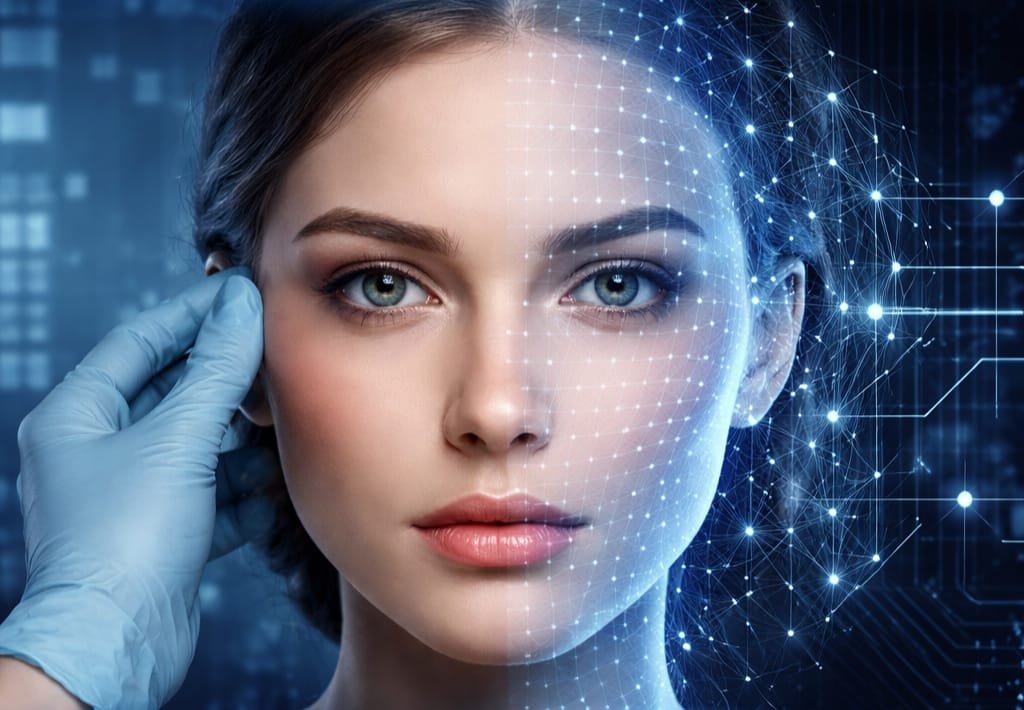
Deep fake technology is an advanced application of artificial intelligence that creates highly realistic but fake videos, images, or audio of people. It uses deep learning algorithms to analyze and learn facial features, expressions, and voice patterns from large datasets. Once trained, the system can generate new content that closely resembles a real person. Deep fakes can make it appear as though someone said or did something they never actually did. This technology is widely used in entertainment, films, and digital media. It also has applications in education, gaming, and virtual communication. However, deep fake technology raises serious ethical and security concerns. It can be misused for spreading misinformation and fake news. Deep fakes may also lead to identity theft and privacy violations. Due to these risks, there is a growing need for detection tools and legal regulations. Responsible use of deep fake technology is essential to prevent harm.
FACES, VOICES AND LIES: “TYPES OF SYNTHETIC DECEPTION”
Deep fake technology uses artificial intelligence to create or manipulate visual, audio, and video content that appears highly realistic. Below are the major types of deep fake technologies and how they are commonly used.
1. Face Swapping
The most common type, where one person’s face is replaced with another’s while preserving expressions and movements.
it Uses Autoencoders or Generative Adversarial Networks (GANs) techniques. in 2021, a deep fake TikTok video where an impersonator’s face was convincingly replaced with Tom Cruise’s shock many people in the world.
2. Lip-Syncing (Audio-Driven)
It involves the Altering of lip movements to match a given audio track, making it look like the person is saying something they never did. It is created via the use of Recurrent Neural Networks (RNNs) or Wav2Lip models. One such incident involving the deep fake lip sync video emerged in march 2022 in which Volodymyr Zelenskyy, President of Ukraine supposedly ordering troops to surrender. It was widely circulated on social media platforms before being debunked.
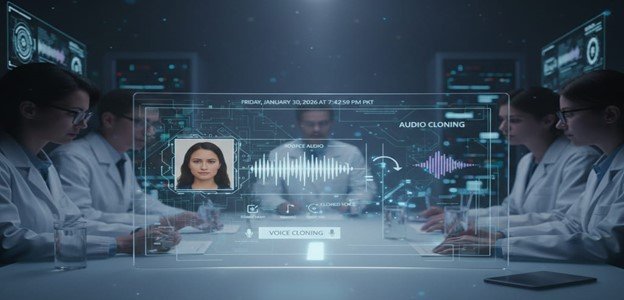
3. Voice Cloning (Audio Deepfakes)
It Replicates a person’s voice to generate synthetic speech that sounds authentic. Scammers can Clone a family member’s voice to fake an emergency and request money.
Technique used for voice cloning are Text-to-Speech (TTS) models like Tacotron, WaveNet, or VALL-E. Joe Rogan, an American podcaster and UFC commentator deep fake audio (2023) on TikTok and YouTube used to pitch a scientifically questionable male enhancement supplement making it sound like Rogan was endorsing the product.
4. Face Re-enactment (Puppet-Master)
This technique involves the transfer of facial movements, expressions and head pose of one person to another person’s face i.e. the target. It makes a still image move like another person or video. First Order Motion Model or neural rendering are usually used for face re-enactment.
In January 2024, a finance employee at a multinational company in Hong Kong office was tricked into transferring about $25 million USD to fraudsters after joining what appeared to be a legitimate video conference call with serious colleagues.
5. Full Body/Person Synthesis
It can generate entirely synthetic humans or swaps full bodies, including posture and movements e.g. in deepfake dancing and virtual influencers.
Techniques used for full body synthetic video creation are GANs, Diffusion Models (like Stable Diffusion), or Neural Radiance Fields (NeRF).
AI generated sextually explicit images and videos of Taylor Swift in 2024 were widely circulated online and seen tens of millions of times before removal.
6. Real-Time Deep fakes
It is Live manipulation of video/audio during a video call or stream. The scammers are now able to join video calls with deep fake faces in what appears to be near real time, making it harder to trust video conferences or video-based identity checks.
Apps like DeepFaceLive that allow real-time face-swapping during video chats.
Sudha Murty, a philanthropist, video was used to promote an online fraudulent investment scheme.
FROM DATA TO DECEPTION: HOW DOES DEEP FAKES ARE MADE
Here is a very simple, non-technical explanation of how deep fake technology actually works.
Deep fake works in 3 basic steps:
- It learns a person;
The system is shown many photos, videos, and voice recordings of a real person.
The AI learns How their face looks, how they smile, talk, blink and how their voice sounds.
- It copies their style;
It creates a digital model of that person. It’s like teaching a student to:
Copy someone’s handwriting or
Copy someone’s accent.
- It puts that person into new video/audio;
Now you give it a new video (someone else acting), or a new text (for voice). It changes the face, expressions, or voice so it looks/sounds like the real person. A Simple example is, if you have a photo of person A and a video of person B talking, it Keeps person A’s face while uses Person B’s movements and makes a fake video of person A talking.
Why people get fooled because the face moves naturally, the voice sounds real, also the video quality is high so the brain thinks: “This must be real.”
THE DARK SIDES OF DEEP FAKE TECHNOLOY
Deep fake technology, while having some legitimate applications (e.g., in film, education, or privacy protection), poses significant and growing risks to individuals, societies, democracies, and global security. Here is a breakdown of the major risks:
1. Political & Societal Risks
- liar’s dividend: The most profound danger is the “liar’s dividend” – the ability for real, damning evidence to be dismissed as a deep fake. This undermines trust in video and audio, which have historically been considered reliable records.
- Election Interference & Political Sabotage: Candidates can be shown making false statements, inciting violence, or appearing in compromising situations, potentially swaying elections or sparking unrest. This can be done by foreign or domestic actors.
- Social Discord & Propaganda: Deep fakes can be used to incite violence, spread panic, or deepen social divisions by fabricating events or speeches targeting specific ethnic, religious, or political groups.
- Undermining Journalism & Institutions: Legitimate investigative journalism can be discredited by claims of “fake news,” and public trust in government, scientific, and media institutions can be further eroded.
2. Individual & Personal Harms
- Non-Consensual Sexual Imagery (Deep fake Pornography): This is the most widespread malicious use. Overwhelmingly targeting women, it involves superimposing a person’s face onto pornographic content, causing severe psychological trauma, reputational damage, and harassment.
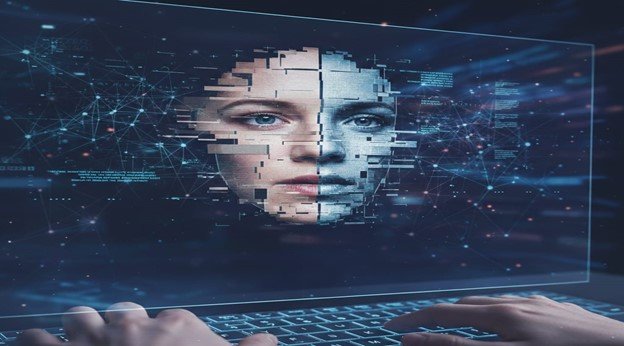
- Reputational & Financial Damage: Individuals (CEOs, celebrities, ordinary people) can be shown engaging in fraudulent activity, making false confessions, or spreading misinformation, leading to job loss, blackmail (“deep fake sextortion”), or financial ruin.
- Harassment & Bullying: Used as a tool for cyberbullying in schools or online communities to humiliate and intimidate victims.
3. Legal & Judicial Risks
- Fabricating Evidence: Deepfakes could be used to plant false audio or video evidence in court, complicating legal proceedings and potentially leading to miscarriages of justice.
- Witness Intimidation: A witness’s testimony could be undermined by a deepfake appearing to contradict them.
- Legal Grey Areas: Laws are struggling to keep up. Issues of consent, defamation, intellectual property, and criminal liability are complex and vary by jurisdiction.
4. Financial & Corporate Fraud
- CEO Fraud & Business Email Compromise (BEC): Using AI-generated voice clones to impersonate a CEO or executive and instruct an employee to make an urgent wire transfer or share sensitive information.
- Market Manipulation: Fabricated videos of a company executive making false statements about earnings, a product failure, or a scandal could be used to manipulate stock prices.
- Identity Fraud: Biometric security (voice or facial recognition) could potentially be bypassed with sophisticated deepfakes.
5. National Security & Foreign Relations Risks
- False Flag Operations: Creating videos of military movements, attacks, or political leaders declaring war to provoke international conflict or justify aggression.
- Espionage & Disinformation Campaigns: Intelligence agents or diplomats could be impersonated to spread false information or damage diplomatic relations.
- Undermining Military & Intelligence: Spreading confusion among troops or the public during a crisis with fabricated orders or events.
6. Psychological & Ethical Impact
- Reality Apathy: As the public becomes aware of deep fakes, they may grow increasingly skeptical of all media, leading to a state of generalized disbelief—a “crisis of reality” where people can choose to believe only what confirms their biases.
- Moral Decay: The technology normalizes the non-consensual use of a person’s image and identity, degrading concepts of personal autonomy and truth.
COUNTERING SYNTHETIC DECEPTION: MITIGATION AND THE COUNTERMEASURES
Deep fake technology represents a fundamental challenge to our information ecosystem. Its greatest threat is not any single fake video, but the cumulative erosion of shared truth and trust that enables functional societies. Addressing it is less about a single “solution” and more about an ongoing arms race—technological, legal, and social—to protect the integrity of information and human dignity.
Combating these risks requires a multi-stakeholder approach including technological detection, legislation, accountability and public awareness.
- Technological Detection: Developing better AI tools (digital forensics) to detect deepfakes by analyzing subtle artifacts like unnatural eye blinking, lighting inconsistencies, or audio-visual sync issues.
- Legislation & Regulation: Passing laws specifically criminalizing malicious deep fake creation and distribution (especially non-consensual intimate imagery), while balancing free speech concerns.
- Platform Accountability: Requiring social media and content platforms to label suspected synthetic media and rapidly remove harmful deep fakes.
- Media Literacy & Public Education: Teaching the public to critically evaluate media sources, check for verification, and be skeptical of emotionally charged content from unverified accounts.
- Provenance & Watermarking: Promoting technical standards (like the C2PA’s “Content Credentials”) to cryptographically sign authentic content at its source, making it easier to identify tampered material.
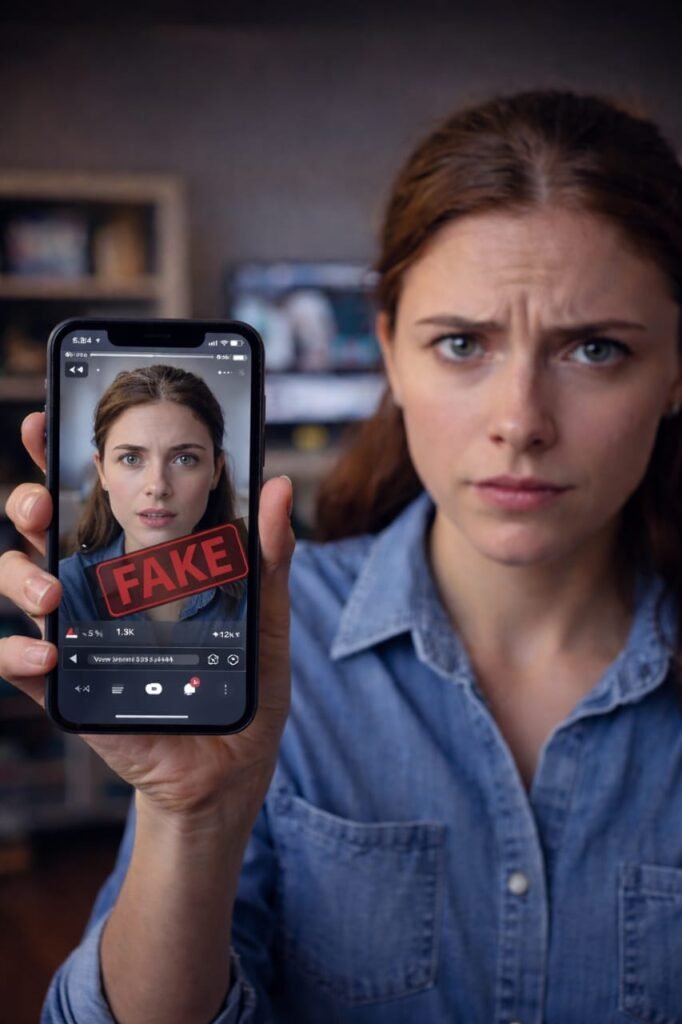
The main laws and punishments for deep fake violations depend on the jurisdiction and type of harm. The rules focus on mandatory labeling, criminalizing abuse (especially non-consensual sexual imagery), and holding online platforms accountable. The severity of punishment ranges from large fines to prison sentences and service bans.
Key Takeaway
Even in places without specific “deepfake laws,” general cybercrime, privacy, defamation, and sexual exploitation laws are actively used to punish misuse of deepfake technology. Many jurisdictions are updating AI and digital services legislation to create clearer definitions and stronger penalties as these threats grow.